Watch This: Dr. Julia Mickenberg on Book TV
This past weekend, Dr. Julia Mickenberg appeared on C-SPAN's Book TV about her book, Tales for Little Rebels: Children's Literature, the Cold War, and Radical Politics in the United States, co-edited with Dr. Philip Nel. Good news: the video is now online! Bad news: the site doesn't permit embedded videos. But you can check the interview out here, and the book here.
5 Questions with Dr. Janet Davis
Today we bring you another incredibly fascinating and comprehensive interview with one of our illustrious faculty members, Dr. Janet Davis! What have been your favorite projects to work on and why?My favorite project is hard to define because I enjoy all of them. Sometimes I love them, sometimes I’m eager for them to be finished, but each has had its moments of incredible revelation and excitement. I would have to say there are two places at which I love the process the most. The first is the initial exhilaration of discovery, which often happens in the shower or out running, or when I’m doing something completely unrelated to work. I believe in the power of being away from work as a generative experience for getting into that creative mode where I make connections and have fun. The act of discovery for my very first book, which came from my dissertation, The Circus Age, came when I was having fun in Chicago for a weekend. I was out with friends at the Museum of Science and Industry, and I saw an incredible circus pictorial display. It was a photographic exhibition of circus parades from roughly 100-150 years ago. At the time I was a student in modern South Asian history. I had just started graduate school and was in my first year, and I was poised to go to India that summer. It hit me like a thunderbolt, this sense of, “Oh my goodness, look at all of the colonial South Asian animals, rituals, dress, aesthetics in these circus parades, ponderously moving down the streets of Keokuk, Iowa, and Salt Lake City, Utah, and Waco, Texas.” All of this popular culture of empire was in full, intimate display for Americans across the country, and it sparked a question for me: why was this happening? What was going on? That process of questioning led to the serendipitous discovery that the world’s largest public circus archive was only forty miles from my home, which is really quite lucky. So I actually switched out of South Asian history and moved into the American history program at the University of Wisconsin, and I loved it. I had a blast doing my research, I had a blast thinking and writing. And I had children along the way while I was living in north central Wisconsin, so that was in and of itself a fascinating and educational experience, living out in the woods for a good chunk of the five years that I was there before I was lucky enough to get hired at UT.The Circus Age led to a slew of other opportunities. Again, it’s hard to say my favorite, because every project has had its own excitement and fun. I think that’s what makes this career so satisfying, in part. I would have to say that these projects grow out of each other, hence the difficulty in answering this question. It’s related to the interconnectedness of one’s own intellectual biography. Working in the circus archives and doing museum consulting at lots of different locations and building a community of people interested in this kind of research led to other projects, including the published memoirs that I edited, annotated, and wrote an introduction for about an aerialist named Tiny Kline. She was an immigrant from the Austro-Hungarian empire and she lived at an industrial boarding school in New York City as a teenager, worked as a dancer, became a burlesque dancer, then became a circus performer and eventually hung by her teeth sliding across Times Square. She was a thrill artist. Tiny Kline later became Tinker Bell at Disneyland when she was 70, so her life story became a wonderful way to think about pop culture during the twentieth century in the United States. I really enjoyed the kind of detective work involved, from talking to her neighbors, to the descendant of one of her night-school teachers in Los Angeles.Out of all of this work on the circus emerged a sense of thinking about animals while reading bits and pieces of protest about cruelty at the circus and what it meant. Although the circus was a pretty scattershot target of animal welfare activity in that era, I discovered that there was indeed an incredible social movement taking place in the nineteenth and into the twentieth century that was interested in thinking about animals and kindness and ideas of American citizenship, civilization, and America’s place in the world. People involved in these movements were redefining American civilization as a kindly civilization by advocating being kind to animals. So these ideas that seem really abstract in some respects about nationhood, empire, cultural pluralism, are all very much tied up into ideas about kindness and this “gospel,” as they called it, “of kindness.” This movement was interconnected with all sorts of other reformist movements during the nineteenth and twentieth centuries. My current project has been going on for quite a few years. What’s really been a surprise for me is that right now I am in the home stretch and I’m more excited about the project than ever, which is kind of surprising. About a year and a half ago, I kind of hated it, but now I’m feeling things are really coming together in a way that I did not expect when I was plowing through massive amounts of seemingly disparate primary material from all over the world. There are certain through lines, such as stray dogs, and the ways in which they speak to changing attitudes about the place of animals in urban environments versus rural environments. Dogs keep appearing in my chapters in really fascinating ways, and now that I’ve had some distance through the review process, I have more of a mountain top view of the project, where I see the landscape of my thinking and the evidence below me in a way that is allowing me to make these final, strong connections. And of course, this project is leading to other things, too.How do you see your work fitting into larger conversations in the academy and contemporary society? I feel like my work is tied to a lot of bigger conversations topically, thematically, and methodologically. My research on animals has given me a wonderful entre into the natural sciences, into thinking about animals as historical subjects—not just in terms of how people relate to them, but in terms of their place in history as physical beings, directly tied to the impact of disease, technology, diet, and to epidemiological changes and technologies of preventative health like vaccines. This project has taken me into places that have been really exciting as far as rethinking what the humanities are. I think these fundamental questions about human-animal relationships are interconnected with questions of public health, diet, how we raise our food, how we live, and where we live. These are fundamental public questions, so I feel like this project really brings me into conversation with so many other fields, and I love it.Are there other projects, people, or things that have inspired your work?I will mention a few people who really inspired me. As an undergraduate, I had amazing mentors. There are so many people who deserve a special shout out, but here, for the sake of time and space, are three: one is my advisor, Eleanor Zelliot. She was a hands-on advisor in terms of being blunt when my research projects weren’t as good as they should be. I had the exhilarating experience of doing a large primary source-based thesis project. Every student at Carleton College was required to complete “Comps,” either in the form of a long senior thesis, or a four-hour, written capstone exam, no matter what their field. This exercise was part of fulfilling a graduation requirement, on the one hand, but it was also an incredible experience of being a researcher. I wrote about a big topic, Indian art and colonialism. I took two centuries’ worth of material and I included architecture in my analysis. It was a big undergraduate project, and Eleanor encouraged me every step of the way. She is a very active scholar and writes about the Dalit movement, the “Untouchables,” and about Dr. B. R. Ambedkar, who was a nationalist and social reformer in India. Her concern for social justice is incredibly inspiring in terms of her own scholarship and extends to the way she has lived her life.Robert Bonner taught British Empire and Victorian England, the Industrial Revolution, and I loved his classes. They were absolutely enthralling. People called him “Hardball Bob” because he was so tough. It’s amazing, because several fellow students in Bob’s small seminars have become professional historians. He was absolutely firm in his demand for clear writing, for evidence, for all the good stuff that we expect. You really had to think clearly, be careful, and support your words. I should note that Bob emphatically steered me away from becoming a lawyer and urged me to apply to graduate school in history. I am indebted to him for encouraging me to follow my heart. After I graduated from college, Bob also made the move over to American history and has published a wonderful book about impresario William F. “Buffalo Bill” Cody’s “other life” as a major western land developer.Emily Rosenberg is a scholar of American foreign relations, of America’s place in the world. She taught at Macalaster College, but she came to Carleton and taught a class when I was a senior. It was a Cold War seminar, my first American history class in college. I loved it. I wrote a paper about American foreign relations with non-aligned South Asia and how cultural representations of each country affected these relationships during the Cold War. Emily and I still stay in touch. She is now a colleague of Allison Perlman, my former graduate student,, at UC-Irvine. The circle grows and grows.In graduate school, Linda Gordon was my Ph.D. supervisor. Her scholarship on women’s history and social movements is fantastic, accessible and beautifully written. She was so generous with her time and so encouraging. This is the funny thing; she always knew I would get a job in American Studies. She told me, “You just think like an American Studies person.” She lives by example; her commitment to social justice is inspiring. Tom McCormick, a scholar of American foreign relations, was and is a fantastic mentor and great friend. He’s another person who pairs his superb scholarship with a great generosity of spirit. Paul Boyer was an amazing mentor and guide in graduate school and beyond. He was an outstanding scholar, deeply committed to social justice, and personally he was so kind, decent, modest, generous, and always available to listen to my ideas. Paul passed away in 2012—I miss his wise counsel and wonderful sense of humor. In knowing Paul, I was lucky enough to get to know Ann Boyer, who remains my friend. My graduate mentors were completely supportive of my decision to have children in graduate school, and to live far away in north central Wisconsin while writing my dissertation. I realize that other advisors might have questioned my level of commitment to graduate study, and my ability to finish my degree under these circumstances. But Linda, Paul, and Tom weren’t worried; they were completely supportive and they believed in me. I feel very, very lucky.How does your research inform your teaching?My scholarship and my teaching are very much in conversation with each other all of the time. The act of discovery in my research and in making the past accessible and exciting and relatable to students is a constant dialogue and process. I could not do one without the other very well. Teaching and research, taken together, allow me to make coherent, “so-what?” sense of a period, an event, a cultural phenomenon, a social movement—whatever the subject—in a limited time frame for a broad audience. As a writer or in a classroom, you have 75 minutes, a certain number of pages, a word limit, or deadline. Time matters. The ability to tell a coherent story, not just tell but show, to offer an interpretation using historical evidence demonstrate how teaching and research are completely interconnected activities.What projects would you like to work on in the future?I have a few projects on the burner. Four, actually. Three are closely connected to the current project. The first is a fuller exploration of humane education in the United States and possibly in its empire, looking at pedagogies of citizenship in conjunction with the broader historical dynamism of race, gender, and class. This is something I explored in my current manuscript to some degree, but there is so much more material out there, especially humane education taking place in historically black colleges and universities. I’m fascinated by how African American activists traveled in an age of Jim Crow, sometimes even speaking to integrated audiences, though primarily speaking to African American children and young adults. Also, there were humane education programs on Indian reservations and boarding schools. The third location I would like to explore is colonial Hawaii, because there was a lot of animal protectionist activity there, too. I am interested in examining these three groups in conjunction with educational history and social thought concerning uplift, the “white man’s burden,” colonialism, citizenship, and civics. I am interested in the ways that black activists, such as F. Rivers Barnwell, John W. Lemon, Seymour Carroll, and Lucy Thurman, made a case for social justice in a racially oppressive society by different means.Another project is related directly to the book. It comes from a chapter I have radically revised and excised on animal protectionism in colonial India. I have bountiful primary sources about activism, surveillance, and resistance in India, but also in places like the British Residency at Aden, where the colonial laws of British India held jurisdiction, as well as in colonial British Africa. I have eighty pages that are waiting to find a home—either in the form of a couple of articles, or as a possible foundation for a separate book project, which will take me away from the United States, altogether.There are two more projects. I’m really interested in the book and movie, Jaws, and the cultural, social, and political settings in which the book and movie became such huge popular hits. I’m going to miss the anniversary: 2014 and 2015 will come and go, but I’m interested in the cultural production of a book, a movie, and a time period, and I want to think about the connections and cultural anxieties and larger meanings of this particular blockbuster complex amid the end of the Vietnam War, in the shadow of Watergate, and at a cultural watershed in American politics. That will be a shorter project. The last project is the one that is very new but very exciting. It’s a project that deals with libertarianism, Rose Wilder Lane and the heir to the Laura Ingalls Wilder franchise, Roger Lea MacBride, who ran for president as the libertarian candidate in 1976. I’m fascinated by his relationship with Rose Wilder Lane and the ways in which a host of cultural productions were connected to a changing political climate in the United States.If you had to describe American Studies in one sentence, what would you say?American Studies is the interdisciplinary exploration of American culture, society, politics, and economy in domestic and transnational settings.Dr. Davis is Associate Professor of American Studies and History here at UT and has been with us since 1998. Her books include The Circus Age: Culture and Society under the American Big Top and Circus Queen and Tinker Bell: The Memoir of Tiny Kline.
Undergrad Research: On Jack Kerouac and Sports
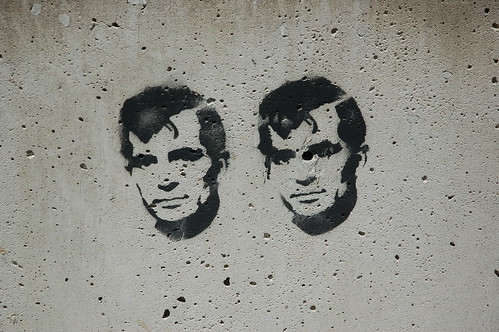 I have a confession to make: I am addicted to Jack Kerouac, and I’m pretty damn happy about that fact.Since my junior year of high school, when I first picked up a copy of On the Road (leant to me by one of my favorite teachers, Amelia Bligh), I have been obsessed with his life and works, and those of his associates—Ginsberg, Burroughs, Corso, Cassady, Snyder, etc. I think my extensive collection of over seventy Beat-related books can attest to that fact, not to mention the posters, the albums, and the films.What always amuses me is that I didn’t react to On the Road the same way that most people do. I’ve heard stories of people reading it and suddenly wanting to pick up a rucksack and hit the road. I respect anyone who can just get up and go like that, but that’s not really my style. I hate driving.No, when I first read that book, I wanted to hit the road in a different way; I wanted to explore it mentally, psychologically. I was passionate for the movement of Kerouac’s prose as it hurtled down the page. There’s nothing like being on the road, but there’s also nothing like hearing people talk about it as sincerely, as hauntingly, and as mythically as he did. The road I wanted to experience was literary, not literal.It’s been five years and I’m still on the road with Kerouac. I’ve read nearly all of his novels, most of his poetry, and chunks of his short stories, correspondence, and journals. I’ve also read several biographies, watched documentaries, and explored analytical studies and interpretations of his works. It hasn’t always been a pleasant ride: the more time you spend with a person, the more you discover their faults and weaknesses. Kerouac was a troubled man, not unlike the other writers and artists he encountered. There were times when I had to step back and reevaluate my appreciation of him, my adoration. Even now, reading and hearing about his dismissal of his only daughter, his hate-filled rants about his wives and his friends, and, of course, his alcoholism, I wonder if I should stop the car and find a bus station somewhere.Nevertheless, I always keep going and keep reading. To love someone means to accept their faults, to acknowledge their mistakes, and to persevere. Good or bad, I accept him for who he was and what he did. This passion for Kerouac, this adoration, is not just a hobby. I want to become a professor and teach my own course on the Beats, though I would prefer to focus on Kerouac. I’m already in the midst of applying to graduate schools, and truthfully, I wouldn’t be the man I am today if it weren’t for this man.Now, to get to the heart of the matter after that lengthy background, in my thesis I’m studying the interactions between Kerouac and sports, in his fiction and his life. A lot has been written on Kerouac, but I have never seen anyone extensively study the ways in which football, baseball, basketball, and a plethora of other activities shaped him physically, mentally, and artistically.The story of Jack Kerouac usually begins with an anecdote about Kerouac’s football scholarship to Columbia University, which he attended on and off from 1940-43. His time on the field was brief: he broke his leg in the middle of his second game, taking him out for the rest of that season. It’s a nice little aside, but most Kerouac scholars use it as a jumping off point to discuss his literary affiliations with the school. It was the place where he met the other Beat figures, like Ginsberg and Burroughs, so it’s understandable.However, Kerouac’s connection to sports is more than just an anecdote. It was one of the most important arenas in which the young Kerouac developed his understanding of the world, his father, his friends, and his imagination. From his earliest childhood experiences going to the racetracks with his father or experiencing the small town barroom scenes in Lowell to his adolescent years playing baseball, football, basketball, and running track on the fields behind the textile mills with his “gang” of friends, these sports were something that connected Kerouac to society.My thesis—tentatively titled Making the Team: The Real and Fantastical Sporting Life of Jack Kerouac—will be split into two distinct sections: Kerouac’s “real” experiences with sports and his “fantastical” experiences, comprised of a study of his fantasy baseball and horseracing games played on and off throughout his life, from childhood up until his death. A little known fact about Kerouac is that he developed an elaborate and fairly complex system of constructing and tracking his fantasy baseball leagues. He developed scorecards for every player, kept track of team rankings, traded players, and wrote his own newspapers documenting new developments. It’s such a fascinating topic, and it surprises me how little has been written about it.Since August, I have read—and re-read—Kerouac’s novels, poetry, short stories, journals, letters, critical analyses, and biographies trying to reconstruct this underlying history of the “King of the Beats.” It’s really made me think about how we chronicle the history of the Beat Generation and how we discuss it. This study will essentially put Kerouac’s Beat years aside and look at the man behind the myth. It does not negate the myth, as I intend to use his fiction and self-reflections prominently, but it does try to explore how myths are created, how authors work, and how reality and fantasy are more closely related than one imagines.I never could have imagined that one book and one man would send me on this, hopefully, lifelong quest, and possible career. But, truth is stranger than fiction. And Jack, if you’re out there somewhere and you happen to read this, I hope I do you justice… and haven’t creeped you out at all.
Faculty Research: Janet Davis on the Circus

One of the best things about American Studies is how it enables telling histories through unexpected popular culture artifacts and experiences: baseball, toys, children's literature - or, in this case, the circus. Dr. Janet Davis is slated to give a talk at the Historic Asolo Theater in Sarasota, Florida, on how the circus shaped the development of modern American society, and the Sarasota Herald Tribune has a lengthy feature on her work.Here's an excerpt:
The evolution of the circus, which first came to America in the late 1700s but was in its heyday in the late 19th and early 20th centuries, parallels growth in American society, sad Davis, whose focus is on social change rather than development of infrastructure.Women, for example, were circus performers from the earliest days, but public perception grew and changed over the decades. The performing arts were a place “of general ill repute for women, and the circus was definitely no different,” she said.But by 1890, female circus performers were prominently featured in the circuses’ advertising, marking “a real transformation in the public place of women in American life. It’s occurring at exactly the same time that women are becoming actively involved in reform movements in America, going to college, working in factories. It’s accompanying this general shift of American women out of the home and into public life.”
Check out the full article here!